

Why Is My Website Not Ranking on Google? A Digital Marketer’s Perspective
- 29 June 2026
- Uncategorized
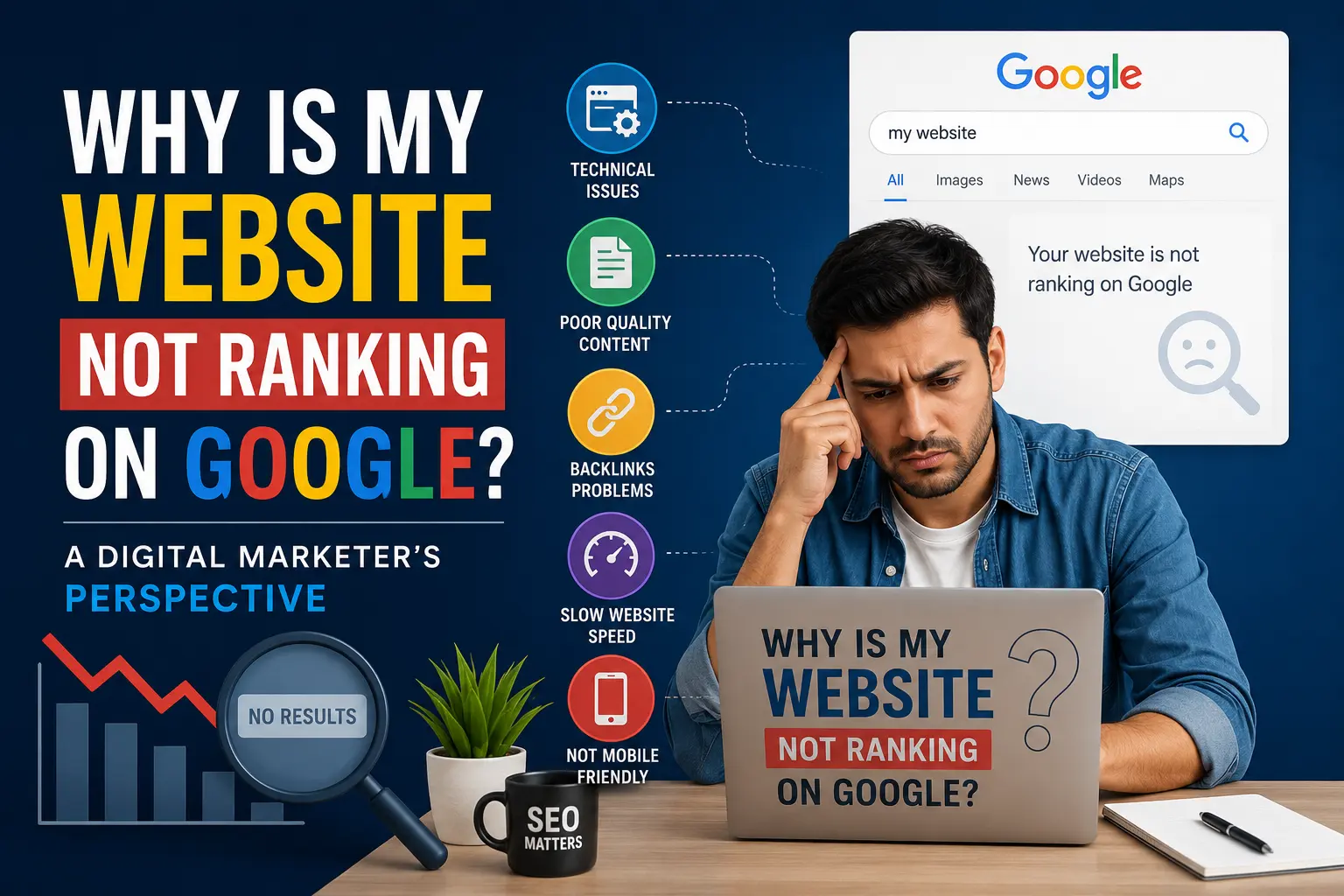
If you've launched a website, invested time in creating content, and expected visitors to start flowing in from Google, it can be frustrating to see little or no organic traffic. As a digital marketer with over five years of experience working on SEO campaigns across different industries, I've seen many websites struggle with rankings for the same reasons. The good news is that most ranking issues can be identified and fixed with the right strategy.
1. Your Website Is Too New
One of the most common reasons a website isn't ranking is simply because it's new. Google takes time to discover, crawl, and evaluate websites before trusting them enough to rank competitively. Even if your content is excellent, new websites often need several weeks or months before they start gaining visibility.
Patience is important, but that doesn't mean you should wait passively. Continue publishing quality content, building authority, and optimizing your pages during this period.
2. You're Targeting Highly Competitive Keywords
Many website owners make the mistake of targeting broad, high-volume keywords from day one. For example, trying to rank for terms like "digital marketing, "insurance" or "fitness tips can be extremely difficult because you're competing against established websites with years of authority.
Instead, focus on long-tail keywords that have lower competition and clearer search intent. These keywords are often easier to rank for and can bring highly targeted visitors to your site.
3. Poor On-Page SEO Optimization
Google relies on on-page signals to understand what your content is about. If your pages are missing important optimization elements, rankings can suffer.
Common on-page SEO issues include:
- Missing or poorly optimized title tags
- Weak meta descriptions
- Lack of keyword placement in headings
- Poor URL structure
- Missing internal links
- Thin or duplicate content
Every page should be optimized around a specific topic while maintaining a natural and user-friendly experience.
4. Your Content Doesn't Match Search Internet
Many websites fail to rank because their content doesn't satisfy what users are searching for. Google prioritizes content that best answers a user's query.
For example, if someone searches for "best laptops under $1000," they expect a comparison list. If your page only discusses laptop specifications without recommendations, Google may not consider it the best result.
Before creating content, analyze the top-ranking pages and understand the type of content Google is rewarding.
5. Technical SEO Problems Are Holding You Back
Technical SEO plays a critical role in rankings. Even great content can struggle if search engines have trouble accessing or understanding your website.
Some common technical issues include:
- Slow page loading speed
- Broken links
- Mobile usability problems
- Crawl errors
- Improper indexing settings
- Missing XML sitemap
- Poor website architecture
Regular technical audits can help identify and resolve these problems before they impact performance.
6. Lack of High-Quality Backlinks
Backlinks remain one of Google's strongest ranking factors. If reputable websites are linking to your content, Google sees your site as more trustworthy and authoritative.
Many websites fail to rank because they have little to no backlink profile. Focus on earning links through:
- Guest posting
- Digital PR campaigns
- Industry partnerships
- Creating valuable resources
- Publishing original research and data
Remember that quality matters far more than quantity when it comes to backlinks.
7. Your Website Has Poor User Experience
Google increasingly considers user experience signals when evaluating websites. If visitors leave your site quickly or struggle to navigate it, rankings may be affected.
A strong user experience includes:
- Fast loading pages
- Mobile-friendly design
- Clear navigation
- Easy-to-read content
- Minimal intrusive pop-ups
- Secure HTTPS connection
The easier it is for users to find information, the better your chances of ranking well.
8. You're Not Tracking SEO Performance
Without data, it's difficult to know what's preventing your website from ranking. Tools such as Google Search Console and Google Analytics provide valuable insights into your website's performance.
Monitor:
- Keyword rankings
- Organic traffic
- Click-through rates
- Indexing status
- User behavior
- Technical errors
Tracking these metrics helps you make informed decisions and improve your SEO strategy over time.
Final Thoughts
If your website isn't ranking, don't assume Google is ignoring you. In most cases, there are specific SEO, content, technical, or authority-related issues that need attention. Successful SEO requires patience, consistency, and a long-term strategy.
The websites that dominate search results today didn't get there overnight. They earned their rankings through quality content, strong optimization, technical excellence, and continuous improvement. By identifying weaknesses in your current strategy and focusing on sustainable SEO practices, you can improve your rankings and attract more organic traffic over time.
About us and this blog
We are a digital marketing company with a focus on helping our customers achieve great results across several key areas.
Request a free quote
We offer professional SEO services that help websites increase their organic search score drastically in order to compete for the highest rankings even when it comes to highly competitive keywords.